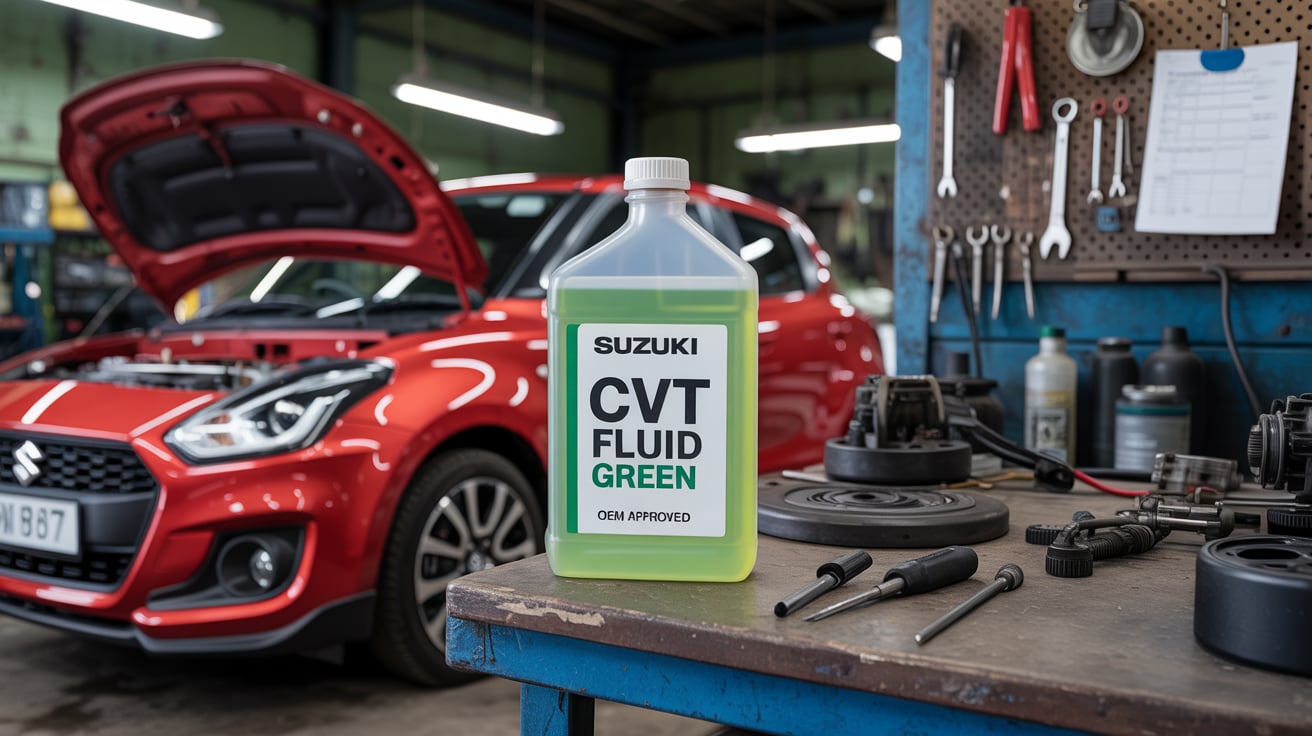
The Truth About Suzuki CVT Fluid Green: Is It Worth the Hype in 2025?
In the world of car maintenance, transmission fluid might not seem like the most glamorous topic—but it’s absolutely crucial. Especially for Suzuki vehicles that run on Continuously Variable Transmissions (CVT), choosing the right fluid is more than just a matter of preference. Recently, the buzz around Suzuki CVT Fluid Green has picked up steam. So, what is it, and does it really live up to the hype?
Let’s dive into the nitty-gritty and explore whether this vibrant green fluid is truly a game-changer for your Suzuki—or just another marketing gimmick.
Understanding CVT Technology in Suzuki Vehicles
As automotive technology evolves, manufacturers like Suzuki are increasingly adopting advanced transmission systems that offer improved performance and efficiency. One such innovation is the Continuously Variable Transmission (CVT), a key component in many of Suzuki’s modern vehicles. Understanding how CVTs work and why they require specially formulated fluids like Suzuki CVT Fluid Green can help you maintain your car’s longevity and optimize driving performance.
What is a CVT and How Does It Work?
A Continuously Variable Transmission, or CVT, is a type of automatic transmission that operates differently from the traditional gearboxes found in older vehicles. Instead of relying on a fixed set of gears, a CVT utilizes a system of variable-diameter pulleys connected by a metal belt or chain. This allows for an infinite number of gear ratios within a range, providing seamless acceleration without the noticeable gear shifts you experience in regular transmissions.
When you press the accelerator in a vehicle equipped with a CVT, the system continuously adjusts the relationship between the engine speed and the wheel speed. This constant fine-tuning allows the engine to operate at its most efficient RPM, regardless of the car’s speed or load. The result? Smoother rides, quieter operation, better fuel economy, and improved responsiveness—particularly during stop-and-go city driving or while climbing hills.
Suzuki incorporates this technology into several models, including the Swift, Vitara, and Baleno, capitalizing on its benefits to deliver a more refined driving experience. Additionally, CVTs help reduce emissions and mechanical complexity, aligning with Suzuki’s goals for environmentally responsible and cost-effective engineering.
Why CVT Fluids Are Different from Traditional Transmission Fluids
Though CVTs provide numerous advantages, they also introduce unique mechanical demands. The internal components—particularly the pulleys and the steel belt—operate under continuous pressure and friction. To ensure their proper function and longevity, specialized lubrication is critical.
Here’s where CVT fluid plays an irreplaceable role. Unlike conventional Automatic Transmission Fluids (ATF), CVT fluids are formulated with advanced friction modifiers, anti-wear additives, and thermal stabilizers tailored specifically for CVT mechanisms. These fluids must maintain a delicate balance of slipperiness and grip—too slippery, and the belt might slip; too sticky, and the system could overheat or become inefficient.
Using the wrong fluid, such as generic ATF or incompatible aftermarket alternatives, can result in:
- Increased belt slippage
- Erratic or delayed acceleration
- Excessive wear on pulleys and bearings
- Transmission overheating
- Complete transmission failure in severe cases
Suzuki recognizes these risks, which is why they developed the Suzuki CVT Fluid Green—a product precisely engineered to match the exact specifications of their CVT systems. This ensures that the transmission continues to operate at peak efficiency while minimizing the chance of breakdowns.
In short, a CVT is a marvel of modern automotive design, and it demands a fluid that’s equally advanced. Relying on standard ATF or incompatible alternatives is not only ineffective but potentially damaging. By using the correct CVT fluid, such as Suzuki CVT Fluid Green, you’re not just following a recommendation—you’re making a smart investment in your vehicle’s future.
Key Features of Suzuki CVT Fluid Green
Suzuki CVT Fluid Green is more than just a lubricant—it’s a meticulously engineered solution tailored to meet the sophisticated demands of modern Continuously Variable Transmissions (CVTs). When it comes to preserving the health of your Suzuki’s transmission system, this fluid stands out for several core features that contribute to optimal performance, long-term durability, and cost-effective maintenance. Let’s take a deeper look at what makes this product a trusted choice among Suzuki vehicle owners and mechanics alike.
Thermal Stability
One of the most critical demands on any transmission fluid is its ability to perform consistently under extreme temperatures. Suzuki CVT Fluid Green excels in this regard, offering exceptional thermal stability that ensures it maintains its chemical structure and viscosity even when exposed to high heat during intense driving conditions.
Whether you’re navigating urban traffic in summer heat, hauling loads up steep inclines, or cruising at high speeds on the highway, CVT systems generate substantial internal friction. Without proper fluid stability, this heat can cause fluid degradation, leading to sludge formation, increased wear, and a reduction in performance.
Suzuki CVT Fluid Green combats this by:
- Preventing fluid breakdown at elevated temperatures
- Maintaining consistent lubrication and pressure within the CVT system
- Resisting the formation of varnish or sludge, which can clog valves and passages
This stability directly contributes to smoother acceleration, reduced wear, and better overall performance, making it especially important for drivers who frequently operate under demanding conditions.
Anti-Wear and Oxidation Resistance
Transmission components, especially in CVT systems, are constantly in motion—subject to pressure, friction, and exposure to air and moisture. Over time, these elements can contribute to oxidation and material fatigue if not adequately protected.
Suzuki CVT Fluid Green contains advanced anti-wear additives and oxidation inhibitors designed to guard the most vulnerable parts of the transmission system, including the belt, pulleys, bearings, and valve body.
Key benefits include:
- Reduced metal-on-metal contact, minimizing friction and extending component life
- Corrosion resistance, which prevents rust and internal degradation
- Slower fluid oxidation, meaning the fluid retains its protective properties for longer periods
As a result, this fluid helps lower maintenance frequency and repair costs by preventing premature transmission damage. Owners can enjoy greater peace of mind knowing their vehicle’s transmission is shielded from both mechanical and chemical threats.
Compatibility with Suzuki Models
Perhaps one of the most practical features of Suzuki CVT Fluid Green is its exclusive compatibility with a wide range of Suzuki models. While other generic CVT fluids may offer a one-size-fits-all approach, Suzuki CVT Fluid Green is specially formulated to meet the brand’s proprietary engineering standards.
Models confirmed to benefit from this fluid include:
- Suzuki Swift
- Suzuki Vitara
- Suzuki Celerio
- Suzuki Baleno
- And several other late-model Suzuki vehicles equipped with factory-installed CVT systems
Because Suzuki CVT Fluid Green is designed to work in harmony with the precise tolerances and specifications of these transmissions, it ensures:
- Optimal lubrication and shifting performance
- Preservation of fuel efficiency and emissions standards
- No risk of chemical incompatibility or fluid foaming
That said, while this fluid is broadly applicable across many Suzuki models, owners should always refer to their vehicle’s user manual or consult a certified Suzuki technician to confirm compatibility before use. Using the right fluid not only protects your vehicle but also safeguards your manufacturer’s warranty.
OEM vs Aftermarket CVT Fluids: The Big Debate
In the realm of car maintenance, few topics spark as much ongoing debate as the OEM vs aftermarket parts and fluids discussion. This is particularly true when it comes to CVT fluids, where compatibility, performance, and cost considerations collide. For Suzuki owners specifically, the question becomes: Should you stick with Suzuki CVT Fluid Green, or explore cheaper aftermarket alternatives? Let’s explore the key factors that fuel this debate.
What Suzuki Recommends
Suzuki has made its stance clear: use only Suzuki CVT Fluid Green for compatible CVT-equipped models. This recommendation is based on the fluid’s unique formulation, which is specifically engineered to meet the stringent demands of Suzuki’s proprietary transmission designs. The OEM (Original Equipment Manufacturer) fluid ensures:
- Consistent friction characteristics for precise belt and pulley interaction
- Optimal hydraulic pressure for smooth gear transitions
- Compatibility with the transmission’s rubber and metal components
- Full alignment with Suzuki’s long-term durability testing
By using a non-OEM or generic CVT fluid, drivers risk not only diminished performance but also voiding their factory or extended warranty coverage. Suzuki and its authorized service providers may refuse to cover transmission-related repairs if non-recommended fluids have been used.
Real-World User Feedback
Automotive forums, Reddit threads, and YouTube reviews offer a window into the real-world experiences of Suzuki owners. A large majority of users consistently endorse the use of OEM CVT Green, citing noticeable benefits such as:
- Smoother and quieter acceleration
- Increased confidence in transmission durability
- Better fuel efficiency over time
However, there are a few users who have experimented with certified aftermarket CVT fluids that meet or exceed JASO (Japanese Automotive Standards Organization) specifications. Some report similar performance at a significantly reduced cost. These users typically own older vehicles or are outside of the warranty period, making them more willing to take the risk.
Still, it’s worth noting that not all aftermarket fluids are created equal. Even if the label reads “CVT compatible,” that doesn’t guarantee safe performance with Suzuki transmissions, which may have more specific viscosity and additive requirements.
Potential Warranty Issues
One of the most overlooked consequences of using non-OEM CVT fluid is the potential loss of warranty protection. Both factory and third-party extended warranties often include a clause that stipulates the use of OEM-approved fluids and parts for all routine maintenance and repairs.
Should your CVT fail while using a non-approved fluid—even one that is high-quality or well-reviewed—you may find yourself financially responsible for the full cost of replacement or repair, which can easily exceed $2,500 to $4,000.
In short, using Suzuki CVT Fluid Green isn’t just about getting the best performance—it’s also about protecting your investment.
Is Suzuki CVT Fluid Green Worth the Hype?
With all the buzz surrounding Suzuki CVT Fluid Green, it’s natural to wonder whether it lives up to its reputation. Does the higher price tag justify the benefits? Or is it simply a matter of brand loyalty and warranty compliance?
Let’s examine this more closely.
Evaluating Performance Data
Several independent lab studies and industry assessments have been conducted to compare OEM CVT fluids with aftermarket alternatives. When it comes to viscosity retention, shear stability, thermal degradation resistance, and metal friction performance, Suzuki CVT Fluid Green consistently ranks near the top.
Key findings include:
- Superior high-temperature stability, which prevents fluid thinning and breakdown
- Consistent frictional characteristics, allowing smoother transitions and less stress on belts and pulleys
- Enhanced oxidation resistance, resulting in longer fluid life and reduced deposit formation
These results validate Suzuki’s claims and help explain why many technicians and performance-focused drivers continue to trust OEM fluid despite its cost.
When to Choose OEM Over Aftermarket
The decision ultimately comes down to your vehicle’s age, warranty status, and driving goals. Here’s a quick guide:
| Scenario | Recommendation |
|---|---|
| Vehicle under factory/extended warranty | Stick with Suzuki CVT Fluid Green to avoid voiding coverage |
| Vehicle less than 5 years old | Use OEM for maximum performance and longevity |
| Vehicle over 7 years old and out of warranty | Consider certified aftermarket CVT fluids to save money—but research carefully |
| High-performance driving or towing | OEM fluid preferred due to superior thermal and wear protection |
| Tight budget, light driving | Vetted aftermarket may be acceptable, but only if certified for Suzuki use |
DIY or Professional: How to Change Your CVT Fluid Safely
Changing your CVT fluid is a crucial part of vehicle maintenance, especially if you want to extend the life of your Suzuki’s transmission. While many car owners choose to leave this task to a professional mechanic, it’s entirely possible to do it yourself—provided you have the right tools, patience, and a solid understanding of the process.
Below is a detailed guide to help you decide whether to go DIY or professional, and how to perform the fluid change safely and correctly if you opt to do it yourself.
Tools and Equipment Needed
Before beginning the job, gather the necessary tools and materials. Using the proper equipment ensures the process is both safe and effective.
- Jack stands or car lift: These allow safe access to the undercarriage of the vehicle. Always ensure your vehicle is securely lifted before working underneath it.
- Drain pan: To catch the old fluid as it drains. Choose a pan with a wide base to avoid spills.
- Torque wrench: Used to correctly tighten the drain bolt to the manufacturer-specified torque settings.
- Funnel: For refilling the CVT fluid cleanly and precisely through the transmission’s fill port.
- OEM Suzuki CVT Fluid Green (3–5 liters): The exact quantity depends on the make and model of your Suzuki and whether you’re doing a full or partial drain. Always check your owner’s manual.
- Gloves and safety glasses (recommended): To protect your hands and eyes from hot fluid and debris.
- New washer/gasket for the drain plug: It’s best practice to replace the washer to prevent leaks.
Step-by-Step Process
Follow this structured process to ensure a smooth and accurate CVT fluid change:
- Warm the Engine:
Start the vehicle and let it run for 5–10 minutes. This warms the fluid, making it easier to drain and more representative of its full volume. - Lift the Vehicle Securely:
Use jack stands or a hydraulic lift to elevate the car to a comfortable height. Never work under a vehicle supported only by a jack—safety first! - Remove the Drain Plug:
Locate the CVT drain bolt (usually at the bottom of the transmission pan) and place your drain pan directly underneath. Carefully unscrew the bolt using a socket wrench, allowing the fluid to drain fully. - Let Old Fluid Drain Completely:
This may take 10–15 minutes. Wait until the flow slows to occasional drips before moving to the next step. Examine the fluid for dark color or a burnt smell—these are signs of wear or overheating. - Replace the Washer and Bolt:
Once drained, clean the drain bolt and replace the washer with a new one. Reinstall the bolt and tighten it to the manufacturer’s torque specification using a torque wrench to prevent overtightening or leaks. - Refill with CVT Green Through the Fill Port:
Locate the fill plug—usually found near the top or side of the transmission case. Use a clean funnel to pour in the new CVT Green fluid slowly. Fill to the recommended level (based on vehicle manual or dipstick reading). This usually ranges from 3 to 5 liters.