
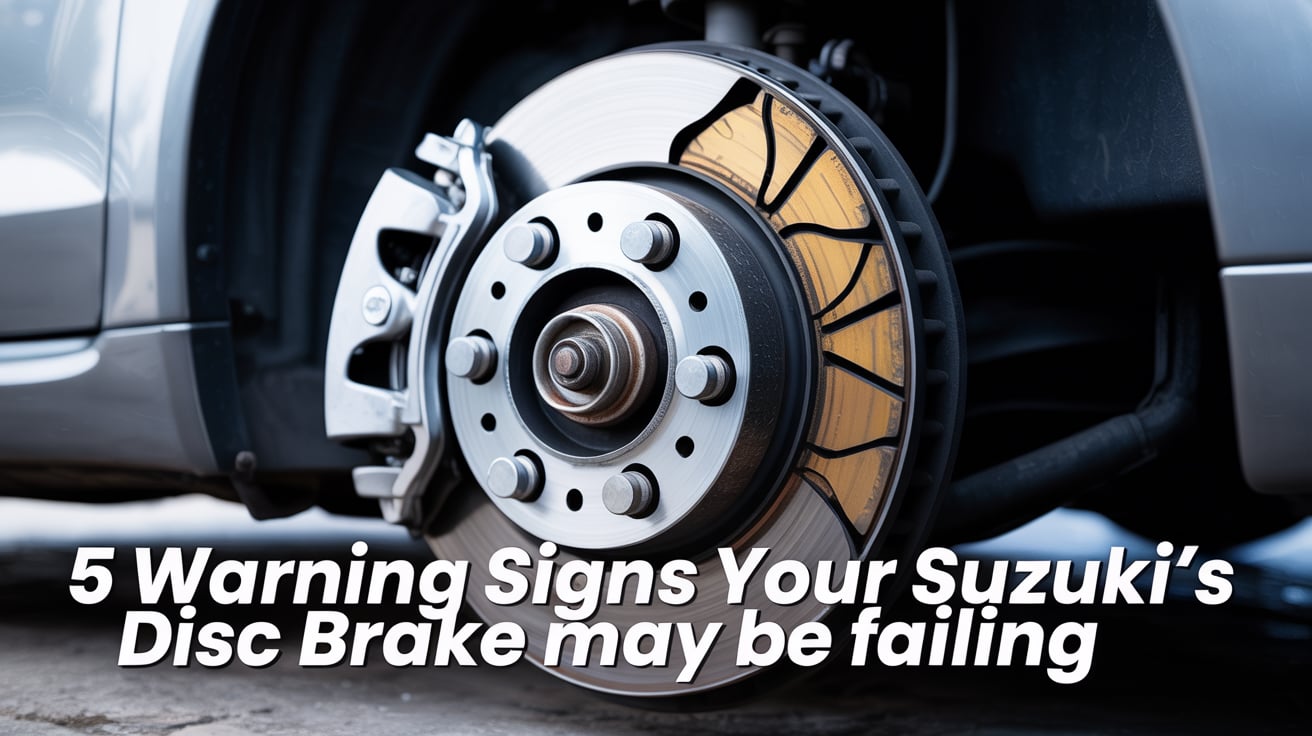
Is Your Suzuki’s Disc Brake Failing? 5 Warning Signs You Can’t Ignore!
When you press the brake pedal in your Suzuki, you’re activating a sophisticated system designed to protect you, your passengers, and everyone sharing the road with you. The disc brakes are at the core of this system, converting your vehicle’s forward momentum into controlled friction that allows you to slow down safely and confidently. Without properly functioning disc brakes, even the most advanced safety features in your Suzuki would be rendered far less effective.
The Basic Function of Disc Brakes
At the heart of the disc braking system are three crucial components: brake pads, calipers, and rotors. Here’s how they work together:
- Brake Pedal Activation: When you apply pressure to the brake pedal, a master cylinder responds by generating hydraulic pressure within the brake lines.
- Hydraulic Pressure Transfer: This pressure is transmitted through brake fluid, which is incompressible, ensuring immediate transfer of force.
- Caliper Engagement: The pressurized fluid forces the calipers to clamp down, pushing the brake pads tightly against the spinning rotors attached to each wheel.
- Friction Generation: The contact between the brake pads and rotors creates friction, which converts the vehicle’s kinetic energy into heat, effectively slowing and eventually stopping your Suzuki.
Unlike older drum brake systems, disc brakes are exposed to open air, allowing them to dissipate heat much more effectively. This design dramatically reduces the risk of brake fade — a dangerous condition where brakes lose effectiveness due to overheating. Suzuki engineers design disc brakes specifically for each model, taking into account weight distribution, expected driving conditions, and performance demands to ensure optimal stopping power.
Why Disc Brakes are Critical for Safety
Disc brakes are not merely a convenience; they are a lifesaving technology. In emergency situations—whether it’s a sudden obstacle on the road, an unexpected pedestrian crossing, or adverse weather conditions—the instant responsiveness of disc brakes can mean the difference between avoiding an accident or facing a dangerous collision.
Here’s why disc brakes are particularly critical in your Suzuki:
- Consistent Stopping Power: Even under heavy loads, such as towing or carrying passengers, disc brakes deliver reliable and consistent stopping force.
- Superior Performance in Wet Conditions: Disc brakes dry quickly after exposure to water, unlike drum brakes that may retain moisture and reduce effectiveness.
- Precision Engineering: Suzuki designs its disc brake systems to complement each model’s suspension, weight, and drivetrain, ensuring balanced braking that doesn’t compromise vehicle stability.
- Quick Heat Dissipation: Because heat is the enemy of braking systems, the open design of disc brakes allows them to cool rapidly, preventing brake fade during repeated or prolonged braking.
In high-stakes moments—like navigating slippery mountain roads or making a fast stop on a busy highway—disc brakes can make all the difference. Suzuki’s focus on precision engineering means that these components are finely tuned for the unique dynamics of your vehicle, giving you the confidence to drive knowing that your brakes are ready to perform when you need them most.
By understanding how your Suzuki’s disc brakes work and why they are so important, you’re better equipped to recognize when something might be wrong and take proactive steps to maintain your vehicle’s safety.
Common Causes of Disc Brake Failures in Suzuki Vehicles
Suzuki engineers its vehicles for durability and reliability, but even the most well-designed components have limits. Disc brakes, despite their robust construction, are subject to several wear factors and potential failures. Understanding these causes empowers you as a Suzuki owner to prevent costly repairs and maintain your vehicle’s safety.
Wear and Tear Over Time
No matter how carefully you drive, disc brakes inevitably wear down with regular use. Every time you apply the brakes, friction gradually erodes the brake pads, and small amounts of heat and stress accumulate on the rotors. Over time:
- Brake Pads Thin Out: As the pads lose material, their ability to generate sufficient friction diminishes. Thin pads expose the metal backing plates, which can grind directly against the rotors.
- Rotor Surfaces Degrade: Continuous braking can create grooves, scoring, and uneven surfaces on the rotors. Heavily grooved rotors not only reduce braking efficiency but also create vibrations and noise.
- Calipers Lose Precision: The calipers, which press the brake pads against the rotors, can become less responsive due to accumulated debris, worn seals, or corrosion, reducing braking force.
Certain driving conditions accelerate this natural wear. City driving with frequent stops, heavy traffic, aggressive braking, and carrying heavy loads put extra strain on your Suzuki’s disc brakes. Mountain driving or towing also adds significant stress due to frequent downhill braking, generating excess heat that can warp rotors faster than normal.
Poor Maintenance Habits
Even the most sophisticated braking system requires routine maintenance to stay effective. Unfortunately, many brake failures stem from overlooked or delayed maintenance, such as:
- Neglected Brake Fluid Changes: Brake fluid is hygroscopic, meaning it absorbs moisture over time. Water in the brake fluid reduces hydraulic efficiency, increases corrosion within the system, and can cause brake fade under extreme conditions.
- Ignoring Pad Inspections: If brake pads aren’t inspected regularly, drivers may unknowingly continue using them after they’ve worn dangerously thin, leading to costly rotor damage.
- Skipping Rotor Resurfacing or Replacement: Minor rotor imperfections can be corrected early through resurfacing. Ignoring this leads to severe wear, forcing a complete rotor replacement.
- Failure to Lubricate Caliper Slides: Dry or seized caliper slides prevent even pad contact with the rotors, causing uneven braking and accelerated component wear.
Preventive maintenance—including regular inspections, fluid checks, and timely replacements—dramatically extends the lifespan of your disc brakes and maintains your Suzuki’s safety.
Manufacturing Defects or Faulty Parts
While relatively rare, manufacturing defects or poor-quality aftermarket parts can also lead to premature disc brake failure. Issues such as:
- Warped or Misaligned Rotors from the Factory: Even brand-new vehicles can occasionally leave the factory with substandard components that compromise performance early.
- Inferior Aftermarket Parts: Budget aftermarket brake pads or rotors often lack the engineering precision and material quality of genuine Suzuki or high-quality aftermarket alternatives. These parts may wear out faster, produce excessive noise, or fail unexpectedly.
- Incorrect Installation: Improper installation of brake components by unqualified technicians can lead to imbalance, uneven wear, or complete system failure.
To minimize risk, always use genuine Suzuki parts or consult certified Suzuki service centers. The upfront investment in quality parts pays off with safer driving, fewer repairs, and longer service life.
5 Warning Signs Your Suzuki’s Disc Brake May Be Failing
Disc brake failures rarely happen without warning. In fact, your Suzuki often gives you plenty of signs that something isn’t right—if you know what to look for. Here are five critical warning signs that demand your immediate attention:
1. Squealing or Grinding Noises
One of the most common—and often first—notices of brake trouble comes through sound. Pay attention to any new noises during braking:
- High-Pitched Squeal: This usually means your brake pads have worn down to a point where a built-in wear indicator (a small metal tab) contacts the rotor to alert you.
- Grinding Sound: If you hear grinding, it likely means the pads are completely worn out, and the metal backing plate is scraping directly against the rotor. This causes significant rotor damage and greatly reduces braking efficiency.
Ignoring these sounds allows minor problems to escalate into major repairs quickly.
2. Brake Pedal Feels Spongy or Soft
When your brake pedal feels mushy or sinks too far when pressed, it often indicates:
- Air in the Brake Lines: Air bubbles compromise hydraulic pressure, reducing braking force.
- Brake Fluid Leak: A drop in fluid level signals a possible leak in the system, whether in the lines, calipers, or master cylinder.
- Worn Master Cylinder: The master cylinder may be failing to generate consistent hydraulic pressure.
A soft brake pedal is an urgent red flag that demands immediate inspection to ensure you don’t lose braking power entirely.
3. Vehicle Pulls to One Side During Braking
If your Suzuki veers to one side when braking, you may be experiencing:
- Uneven Pad Wear: One side may have worn pads, while the other still has sufficient material.
- Stuck or Seized Caliper: A sticking caliper may apply uneven pressure to the wheels, throwing off balance.
- Uneven Rotor Wear: Warped or excessively worn rotors can also cause this pulling effect.
Aside from brake safety, prolonged driving under these conditions can damage suspension components, making repairs even costlier.
4. Vibrations or Pulsations When Braking
Feeling pulsations through the brake pedal or steering wheel often indicates warped rotors. As the rotor’s uneven surface passes through the calipers, it creates:
- Irregular Contact Points: Leading to a pulsating braking sensation.
- Heat Spots: Excessive braking heat can cause rotor surfaces to expand unevenly, resulting in warping.
Rotor warping not only affects braking comfort but also reduces braking performance and stability.
5. Brake Warning Light on Dashboard
Modern Suzuki vehicles include sensors that monitor the brake system’s performance. If the brake warning light illuminates, it could indicate:
- Low brake fluid levels
- Faulty ABS system
- Malfunctioning sensors
- Severe brake component wear
Never ignore this light—it’s your Suzuki’s way of telling you that the braking system needs immediate attention.
Preventive Maintenance Tips to Extend Your Suzuki’s Disc Brake Life
Your Suzuki’s disc brakes are designed for durability, but their lifespan largely depends on how well you maintain them. Regular care and mindful driving habits can add tens of thousands of miles to your brakes’ life, save you money, and, most importantly, keep you safe. Preventive maintenance isn’t just good for your wallet — it’s essential for your safety.
Routine Maintenance Schedule
Sticking to a regular maintenance schedule is one of the most effective ways to ensure your disc brakes remain in top condition:
- Follow Manufacturer Guidelines: Suzuki provides detailed maintenance schedules in the owner’s manual, tailored for each model. These recommendations consider your vehicle’s specific weight, braking system design, and expected usage.
- Brake Inspections with Oil Changes: A good rule of thumb is to have your brakes inspected every time you have your oil changed. For most drivers, that’s every 5,000 to 10,000 miles, depending on your driving conditions.
- Pad Thickness Monitoring: Technicians should check the thickness of your brake pads during every inspection. Replacing pads before they wear too thin helps protect the rotors from expensive damage.
- Brake Fluid Replacement: Brake fluid should typically be flushed and replaced every 2 years, or as recommended by Suzuki. Fresh brake fluid ensures maximum hydraulic efficiency and prevents moisture-related system corrosion.
Routine maintenance helps you catch minor issues early—before they turn into major, costly repairs or safety hazards.
Driving Habits That Reduce Brake Wear
How you drive has a significant impact on your disc brakes. Adopting smart driving habits can dramatically slow wear and tear:
- Avoid Sudden Stops: Hard braking generates extreme heat, causing the brake pads and rotors to wear out faster. Anticipate traffic flow and stop gradually whenever possible.
- Keep a Safe Following Distance: Maintaining a safe buffer between you and the vehicle ahead gives you more time to react, reducing the need for frequent, harsh braking.
- Use Engine Braking on Declines: When descending hills or approaching a stop, downshift or ease off the accelerator to let the engine naturally slow the vehicle before engaging the brakes.
- Reduce Heavy Loads: Excess weight puts additional strain on your braking system. Whenever possible, avoid carrying unnecessary cargo or towing loads that exceed your Suzuki’s rated capacity.
Consistently practicing these habits helps distribute braking force more evenly and minimizes heat buildup, which is one of the leading causes of rotor warping and brake fade.
Choosing Quality Brake Parts and Fluids
When the time comes for repairs or replacements, the quality of parts you choose directly influences brake performance and longevity:
- Genuine Suzuki OEM Parts: These parts are specifically engineered for your vehicle’s specifications, ensuring optimal fit, performance, and safety.
- High-Quality Aftermarket Alternatives: If OEM parts are unavailable or cost-prohibitive, reputable aftermarket brands that meet or exceed OEM standards can be a safe alternative. Avoid budget brands that may use inferior materials.
- Premium Brake Pads: Look for pads made from high-quality materials such as ceramic or semi-metallic compounds. These offer better heat resistance, longer lifespan, and quieter operation.
- Top-Grade Brake Fluid: Always use the brake fluid type recommended by Suzuki. High-quality fluid resists moisture absorption and maintains consistent hydraulic performance under varying temperatures.
Investing in premium parts may seem costly upfront, but it pays dividends by reducing the frequency of repairs, improving safety, and preserving the integrity of your entire braking system.
Frequently Asked Questions (FAQs)
Conclusion: Stay Safe with Timely Brake Maintenance
Your Suzuki’s disc brakes are one of its most critical safety systems. Recognizing the early warning signs of failure can prevent accidents, save money, and ensure peace of mind on the road. Don’t ignore the signals—schedule routine inspections, practice safe driving habits, and seek professional repairs when needed. After all, nothing is more valuable than your safety and the well-being of those you share the road with.
For more detailed car maintenance tips and expert buying guides, visit Purchaser — your trusted source for automotive knowledge.


