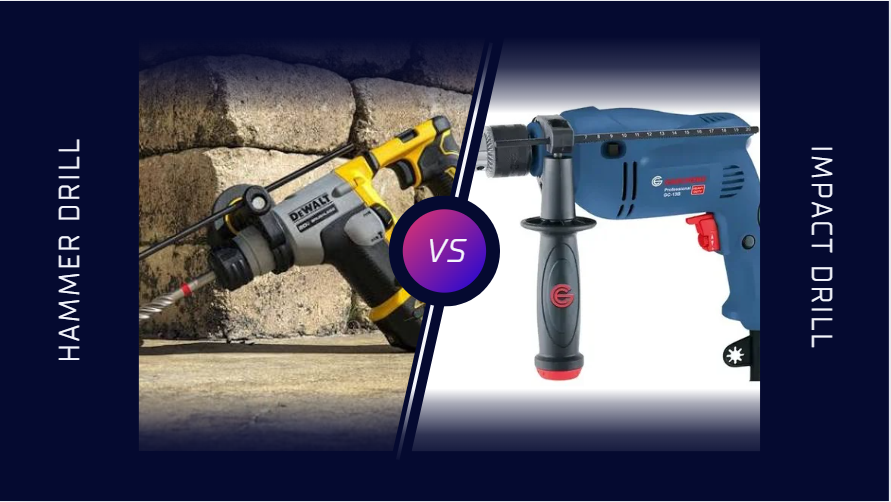
Hammer Drill vs Impact Driver — Best Tool To Buy in 2026?
In a modern tool lineup, choosing between a hammer drill vs impact driver — which tool should you really buy in 2026? is a question that comes up again and again for both weekend DIYers and seasoned professionals. At first glance, these tools may look similar. They’re often sold side by side, share the same batteries, and even sound somewhat alike when running. But don’t be fooled they’re built for very different jobs.
Whether you’re building a deck, installing kitchen cabinets, mounting shelves, or drilling into concrete, using the wrong tool can mean slower progress, damaged materials, stripped screws, or unnecessary fatigue. Using the right tool, on the other hand, makes work faster, cleaner, and far more satisfying.
Fast forward to 2026, and the decision matters more than ever. Power tool technology has taken a big leap forward:
- Batteries last longer and charge faster
- Brushless motors deliver more power with less heat
- Tools are lighter, smarter, and more ergonomic
With these advancements, understanding what each tool is designed to do is the key to getting the best performance and long-term value from your investment.
🔩 What Is a Hammer Drill?
A hammer drill is a power tool specifically designed to drill holes into hard, dense materials such as concrete, brick, stone, and masonry. What sets it apart from a standard drill is its ability to combine rotational motion with a rapid forward hammering action.
Think of it like this:
Instead of just spinning the drill bit and hoping it cuts through tough material, a hammer drill pounds the surface thousands of times per minute while rotating. This hammering motion helps break up concrete or brick so the bit can dig in more easily.
🔧 Key Features of a Hammer Drill
- Dual-action mechanism: Rotation + hammering for tough materials
- Mode selector: Switch between standard drilling and hammer drilling
- Larger chuck: Accepts a wide range of standard drill bits, including masonry bits
- High-speed performance: Ideal for drilling precise holes
In 2026, most hammer drills are cordless, offering impressive power without the hassle of cords. Thanks to improved lithium-ion batteries and brushless motors, today’s cordless hammer drills rival older corded models in performance—making them suitable for both professional job sites and serious home projects.
👉 Best used when drilling holes for anchors, concrete screws, wall plugs, or masonry fasteners.
🔧 What Is an Impact Driver?
An impact driver is a compact, high-torque tool built primarily for driving screws, bolts, and fasteners. Unlike a hammer drill, it does not hammer forward. Instead, it delivers quick, powerful rotational impacts that help turn fasteners with minimal effort from the user.
Here’s the magic:
When resistance increases—like when a long screw hits dense wood—the impact driver automatically releases short bursts of rotational force. This prevents the motor from stalling and reduces strain on your wrist.
🔩 Key Features of an Impact Driver
- High torque output: Ideal for stubborn or long fasteners
- Rotational impact mechanism: Power delivered in controlled bursts
- 1/4″ hex collet: Quick-change system for driver bits and socket adapters
- Compact & lightweight: Perfect for tight spaces and overhead work
Impact drivers truly shine when working with deck screws, lag bolts, structural fasteners, and automotive bolts. They also reduce the risk of cam-out (when a bit slips out of a screw head), which means fewer stripped screws and cleaner results.
👉 Best used for fastening tasks where speed, control, and power matter.
⚖️ Hammer Drill vs Impact Driver
| Feature | Hammer Drill | Impact Driver |
|---|---|---|
| Main Motion | Rotary + forward hammering | Rotational impacts |
| Primary Purpose | Drilling into concrete & masonry | Driving screws & fasteners |
| Chuck Type | Standard adjustable drill chuck | 1/4″ hex quick-change |
| Torque Output | Moderate | Very high |
| Ease for DIY Users | Best for heavy materials | Best for fastening tasks |
When asking hammer drill vs impact driver — which tool should you really buy in 2026?, the answer comes down to how the force is applied:
- A hammer drill applies force forward to break hard surfaces
- An impact driver applies force around to twist fasteners efficiently
Understanding this single difference helps you choose the right tool—and avoid frustration—every time.
Performance Comparison: Power Where It Matters
When it comes to raw performance, the debate between a hammer drill vs impact driver isn’t about which is stronger overall—it’s about how and where that power is delivered.
🔄 Speed & Torque
Impact drivers are built for torque, and lots of it. They deliver short, controlled bursts of rotational force, which allows them to drive long screws, lag bolts, and stubborn fasteners with ease. This pulsing action prevents the motor from stalling and reduces strain on your wrist.
Hammer drills, on the other hand, focus less on torque and more on impact speed. Their rapid forward hammering motion is designed to fracture hard materials like concrete and brick so the drill bit can cut through efficiently.
In simple terms:
- Impact driver = twisting power
- Hammer drill = forward striking power
🧱 Drilling Ability
If masonry is involved, the hammer drill clearly takes the lead. Its hammering mechanism allows it to outperform an impact driver when drilling into:
- Concrete walls
- Brick foundations
- Stone surfaces
Most hammer drills also let you switch off the hammer function, turning them into a standard drill for wood, plastic, or metal. However, this versatility doesn’t mean they replace impact drivers for fastening tasks.
⏱️ Speed & User Fatigue
When it comes to fastening speed, impact drivers win hands down. They drive screws faster and with less physical effort. Because the tool absorbs much of the resistance, users experience:
- Less wrist strain
- Better control
- Faster completion times
For long projects, that reduced fatigue can make a noticeable difference.
🧰 Size, Weight & Ergonomics
Tool comfort might not seem important—until you’ve been working for hours.
Impact drivers are generally smaller, lighter, and more compact than hammer drills. This makes them ideal for:
- Overhead work
- Tight or awkward spaces
- Extended use without fatigue
Hammer drills tend to be heavier due to their internal hammering components and larger chucks. While this added weight helps stabilize the tool during heavy drilling, it can become tiring during long sessions.
🤲 Ergonomic Considerations
- Impact drivers:
- Compact body
- Excellent balance
- One-handed operation in many cases
- Hammer drills:
- Larger grip for stability
- Often require two hands for precision
- Better control during high-resistance drilling
In 2026, manufacturers are paying close attention to battery placement and weight distribution, making both tools more comfortable and better balanced than ever before.
📌 Best Use Cases for a Hammer Drill
A hammer drill is the right choice when your project involves hard, unforgiving materials. You should reach for one when working on:
- Drilling into brick, stone, or concrete
- Installing anchors, wall plugs, or concrete screws
- Creating large-diameter holes in masonry
- Structural or heavy construction tasks
From mounting handrails to installing shelving on concrete walls, the hammer drill is a go-to tool for builders, renovators, and serious DIYers who regularly face tough materials.
📍 Best Use Cases for an Impact Driver
An impact driver excels at fastening, especially when speed and efficiency matter. It’s the best choice for:
- Driving long screws into wood or metal
- Building decks, fences, and frames
- Tightening or removing automotive fasteners
- High-volume, repetitive fastening jobs
While impact drivers aren’t designed for drilling concrete, they can handle light drilling tasks with the right adapter. Still, this should be seen as a temporary solution—not a replacement for a hammer drill.
Power Source Options: Corded vs Cordless in 2026
In 2026, both hammer drills and impact drivers are overwhelmingly cordless, thanks to major advancements in battery technology. That said, corded tools still have a place depending on how and where you work.
🔌 Corded Tools
Corded hammer drills and drivers remain relevant for users who need consistent, uninterrupted power.
Advantages:
- Unlimited runtime — no battery swaps
- Often deliver sustained high power
- Ideal for workshops and stationary jobs
Limitations:
- Restricted movement due to cords
- Less practical for outdoor or elevated work
Corded tools are best for professionals working in a fixed location or for long-duration masonry drilling where downtime isn’t an option.
🔋 Cordless Tools
Cordless tools dominate modern job sites and home garages for good reason.
Advantages:
- Complete freedom of movement
- No cords to manage or trip over
- Modern batteries are lighter, stronger, and faster-charging
In 2026, cordless hammer drills and impact drivers offer power levels that rival—or even surpass—older corded models. For most users, cordless tools provide the perfect balance between performance and convenience.
👉 Bottom line:
Most homeowners and job-site professionals prefer cordless tools unless their work demands constant, uninterrupted power.
🔌 Battery & Runtime Considerations
Not all batteries are created equal. Choosing the right battery can dramatically affect performance, runtime, and overall satisfaction.
🔍 What to Look For
- Battery Voltage (18V / 20V):
The most common standard in 2026, offering a strong balance between power and size. - Amp-Hour (Ah) Rating:
Higher Ah means longer runtime. For example:- 2.0Ah = lighter, shorter jobs
- 5.0Ah+ = longer sessions, heavier tasks
- Fast-Charging Capability:
Modern chargers can replenish batteries in under an hour, reducing downtime.
⚙️ Brushless Motor Advantage
In 2026, brushless motors paired with lithium-ion batteries deliver:
- More efficient power use
- Less heat buildup
- Longer tool lifespan
- Improved battery runtime
Even compact tools now offer impressive performance thanks to this combination.
🔩 Accessories & Bit Compatibility
Accessories play a huge role in how effective your tool is. Using the right bit not only improves results—it protects your tool from unnecessary wear.
🔧 Bit Compatibility
- Hammer drills:
Use standard drill bits with larger shanks, including masonry and concrete bits. - Impact drivers:
Use 1/4″ hex bits that snap in quickly for fast changes.
🧰 Popular Accessories
- Masonry bits (hammer drills)
- Self-feed and spade bits (impact drivers)
- Socket adapters for bolts and nuts
- SDS-plus adapters for heavier masonry work
👉 Pro tip:
High-quality bits stay sharper longer, drill cleaner holes, and reduce strain on both the motor and your hands.
💰 Price Comparison & Value for Money
Pricing varies based on power, features, and build quality, but general trends remain consistent.
💵 Budget Range
- Impact drivers: More affordable and widely available
- Hammer drills: Slightly higher cost due to added mechanics
⚖️ Midrange
- Balanced power and durability
- Good battery life
- Ideal for serious DIYers and professionals
🏆 Premium Tier
- Brushless motors
- Smart electronics (thermal protection, load sensing)
- Longer warranties and better build quality
👉 Value verdict:
For most users, impact drivers offer more utility per dollar, especially for everyday fastening tasks.
🛡️ Safety Tips for Both Tools
Power tools demand respect. Following basic safety practices can prevent injuries and costly mistakes.
⚠️ Essential Safety Tips
- Always wear eye and ear protection
- Clamp small or unstable workpieces
- Keep hands clear of moving bits
- Inspect batteries for cracks or swelling
- Maintain a firm, controlled grip
Proper training and awareness are especially important when using high-torque impact drivers or hammer drills under heavy load.
🏆 Top Picks in 2026 (Category Guide)
Without naming brands, here are the tool categories worth considering in 2026:
- Best compact impact driver for tight spaces
- Best heavy-duty hammer drill for masonry
- Best cordless combo set for versatility
- Best budget-friendly option for beginners
Look for brushless motors, high Ah batteries, solid ergonomics, and strong warranties when comparing options.
📊 Pros & Cons Summary
| Tool | Pros | Cons |
|---|---|---|
| Hammer Drill | Excellent for concrete and masonry | Heavier and more expensive |
| Impact Driver | High torque, compact, fast | Not suitable for concrete |
FAQs
Conclusion
So when it comes to Hammer Drill vs Impact Driver, Which Tool Should You Really Buy in 2026?, here’s the bottom line:
- Get a hammer drill if you frequently drill into masonry, stone, or concrete.
- Get an impact driver if your main needs are driving screws and fasteners.
- Best choice for most homeowners: Start with an impact driver, then add a hammer drill if your projects demand it.
Both tools are excellent investments, and when paired with quality batteries and accessories, they’ll serve you reliably throughout 2026 and beyond.