Understanding Motor Controllers: How They Work and Their Applications
A motor controller is a device that governs the performance of an electric motor, including its speed, torque, and direction. Motor controllers are an essential part of modern electrical systems, serving as the brain behind motors in many industries and consumer applications. Whether you’re running an electric vehicle or an industrial machine, motor controllers are vital for ensuring efficient and safe operation.
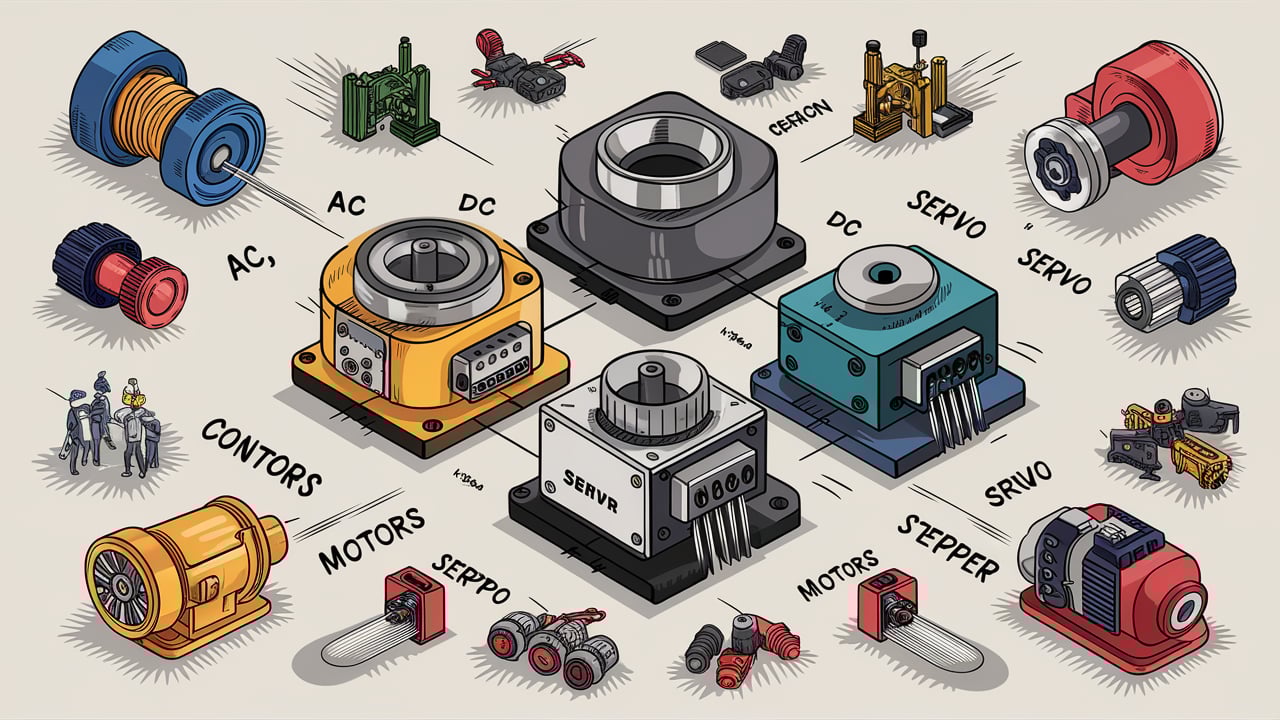
Motor controllers are designed to handle a wide range of motor types, from simple AC or DC motors to more complex stepper and servo motors. Their core function is to regulate power flow to the motor and adapt the motor’s performance according to the system’s needs. Without motor controllers, motors would lack precision and control, leading to inefficiency or damage.
The importance of motor controllers cannot be overstated in today’s technology-driven world. They play a pivotal role in industries like manufacturing, robotics, and transportation, making modern automation possible. Whether the goal is to conserve energy, improve performance, or ensure safety, motor controllers have become indispensable components in virtually every electrically powered machine.
Types of Motor Controllers
Motor controllers can be broadly categorized into several types based on the type of motor they control and the application they are used for. The three main types are:
Types of Motor Controllers
Motor controllers can be broadly categorized based on the type of motor they control and their applications. Below are the main types:
| Type of Motor Controller | Description |
| AC Motor Controllers | Used with AC motors, commonly found in industrial machines and HVAC systems. They regulate speed and torque by adjusting voltage or frequency. |
| DC Motor Controllers | Used in battery-powered devices like electric vehicles and robotics. They control current and voltage to manage speed and direction. |
| Servo and Stepper Motor Controllers | Designed for precision motors, such as those used in robotics and CNC machines. Servo motors offer closed-loop control, while stepper motors control movements in defined steps. |
Key Components of a Motor Controller
A motor controller is composed of several key components that work together to manage the motor’s operation. These components include:
- Power Supply and Regulation: Motor controllers require a steady power supply to function properly. The power supply is regulated to ensure that the motor receives the correct voltage and current.
- Switching Components: These are typically transistors or thyristors that control the power flow to the motor. By switching on and off rapidly, they manage the speed and direction of the motor.
- Control Logic Systems: At the heart of every motor controller is the control logic system, which interprets input signals and adjusts the motor’s performance accordingly. This system may include microcontrollers, processors, or other control circuitry.
The Working Principle of Motor Controllers
Motor controllers operate on the principle of managing electrical power to achieve desired motor behavior. They do this by regulating the flow of electricity to the motor’s terminals, adjusting parameters like speed, torque, and direction.
For instance, many motor controllers use pulse width modulation (PWM) to control the amount of power delivered to the motor. By switching the power on and off at rapid intervals, PWM allows precise control over the motor’s speed. Other controllers rely on more advanced techniques, such as field-oriented control (FOC), which is used for high-performance applications requiring smooth and efficient operation.
Motor controllers also incorporate feedback systems, which monitor the motor’s performance and adjust its operation to match the required conditions. Feedback systems ensure that the motor operates efficiently under varying loads and conditions, preventing issues like overheating or excessive wear.
Applications of Motor Controllers
Motor controllers are used in a wide variety of applications, making them one of the most versatile components in electrical engineering. Here are some of the most common areas where motor controllers play a crucial role:
- Industrial Automation: In manufacturing environments, motor controllers regulate the performance of machines that assemble, weld, and package products. Precision and speed control are critical in these settings, and motor controllers ensure smooth operation.
- Electric Vehicles: The efficiency of electric vehicles (EVs) heavily depends on their motor controllers. These devices manage the flow of power from the battery to the motor, optimizing the vehicle’s performance and range.
- Consumer Electronics: From home appliances to power tools, motor controllers are integrated into numerous consumer products. For instance, the speed of a blender or the torque of a drill is regulated by a motor controller.
AC Motor Controllers Explained
AC motor controllers are commonly found in industrial settings and home appliances. These controllers manage the speed and torque of alternating current motors, often using variable frequency drives (VFDs) to adjust the motor’s output.
VFDs allow for the precise control of motor speed by varying the frequency of the power supplied to the motor. This makes them ideal for applications like conveyor belts, pumps, and fans, where controlling motor speed is crucial for efficiency and performance.
DC Motor Controllers Explained
DC motor controllers are used with both brushed and brushless DC motors. The most common type of DC motor controller is the H-bridge, which controls the direction of current flow and, consequently, the direction of the motor’s rotation.
In brushed DC motors, the controller manages the power supplied to the motor’s brushes, adjusting speed and torque. In brushless DC motors, the controller switches the current in the motor’s coils to generate a rotating magnetic field, driving the motor’s rotor.
Servo Motor Controllers
Servo motor controllers are designed for high-precision control tasks, where accuracy in position, speed, and torque is crucial. These controllers are part of a closed-loop system, meaning they rely on feedback from sensors to ensure the motor is operating correctly and making adjustments as necessary.
Servo motors are used in a variety of applications, such as robotics, CNC machines, and automated manufacturing equipment. In these systems, servo motor controllers adjust the motor’s output in response to signals from sensors, ensuring that the motor’s position and speed match the desired values. This closed-loop control offers exceptional precision, making servo motors a go-to choice for applications where accuracy is critical.
Servo motor controllers typically work with PID (Proportional-Integral-Derivative) control loops. This algorithm helps the controller correct any deviations in motor performance by constantly comparing the motor’s actual output with the desired output and adjusting accordingly. This leads to smooth and efficient operation, even under varying load conditions.
Stepper Motor Controllers
Stepper motor controllers are another type of specialized motor controller, often used in applications that require incremental movement and precise positioning. Stepper motors differ from other types of motors because they move in discrete steps, controlled by electrical pulses. This makes them ideal for systems that need to make precise movements, such as 3D printers, camera gimbals, and medical devices.
The main advantage of stepper motors is their ability to provide high levels of control without needing a feedback system, making them simpler and more cost-effective than servo motors in certain applications. However, they are less efficient and can overheat if used under heavy loads for extended periods.
A stepper motor controller works by sending a series of pulses to the motor, each one causing the motor to move by a fixed increment or step. The controller can adjust the frequency of these pulses to control the motor’s speed and direction, providing precise control over its movement. Stepper motor controllers are often found in open-loop systems, where feedback is not required because the position is inherently controlled by the number of pulses sent to the motor.
Motor Controllers in Electric Vehicles
Electric vehicles (EVs) rely heavily on motor controllers to manage the performance of their motors. In an EV, the motor controller is responsible for converting the energy stored in the battery into electrical power that can drive the vehicle’s motor, ensuring that the vehicle operates efficiently and responds correctly to the driver’s inputs.
A typical EV motor controller uses advanced algorithms to optimize the power flow, balancing efficiency with performance. For example, when accelerating, the controller must provide enough power to the motor to ensure smooth acceleration while minimizing energy consumption to extend the vehicle’s range. Likewise, during regenerative braking, the motor controller helps recover energy by converting the motor into a generator, feeding power back into the battery.
Motor controllers in electric vehicles also play a critical role in battery management. By monitoring the battery’s state of charge, temperature, and other parameters, the controller can adjust the motor’s performance to ensure the battery is not overworked or damaged. This extends the lifespan of both the motor and the battery, making EVs more reliable and efficient.
Motor Controllers in Robotics
In the field of robotics, motor controllers are used to drive the actuators that control the robot’s movements. Whether it’s a robotic arm performing precision tasks or an autonomous mobile robot navigating through an environment, motor controllers are essential for ensuring that the robot’s movements are accurate, smooth, and responsive.
Robotic systems often combine servo motors and stepper motors, depending on the application. Servo motors, with their closed-loop control, are preferred for tasks that require fine adjustments and real-time corrections. Stepper motors, on the other hand, are used in simpler systems where position control is important but feedback is not necessary.
The use of motor controllers in robotics also enables motion control algorithms, which ensure that the robot’s movements are coordinated and efficient. These controllers can manage multiple motors simultaneously, synchronizing their actions to achieve complex tasks, such as picking up objects or performing delicate assembly work in a manufacturing environment.
Safety Features in Motor Controllers
Motor controllers are equipped with a variety of safety features to protect both the motor and the system in which they operate. These features are critical in preventing damage caused by electrical faults, mechanical failures, or environmental conditions such as overheating.
Some of the key safety features found in motor controllers include:
- Overload Protection: This feature protects the motor from drawing too much current, which can happen if the motor is under heavy load. Overload protection automatically shuts down or limits the motor’s operation to prevent damage.
- Overcurrent Protection: This safeguards the motor from excess current that could result from a short circuit or other electrical fault. The controller will shut off the power or trip a circuit breaker to avoid further damage.
- Overtemperature Protection: Heat can severely affect motor performance and lifespan. Motor controllers often have built-in thermal sensors that monitor the motor’s temperature and shut it down if it exceeds safe levels.
- Soft Start and Stop: This feature gradually increases and decreases motor speed to prevent mechanical stress or wear. By ramping up the motor’s speed slowly, it reduces the risk of damage to gears, belts, or other connected components.
These safety features ensure the reliability and longevity of the motor and the entire system, minimizing downtime and maintenance costs.
Choosing the Right Motor Controller
Selecting the correct motor controller is essential for ensuring optimal performance and compatibility with your application. Several factors must be considered when choosing a motor controller, including the type of motor, power requirements, and the specific application’s needs.
- Type of Motor: The motor controller you choose must be compatible with the motor you’re using. Whether it’s an AC motor, DC motor, stepper, or servo motor, each type requires a specific controller.
- Power Requirements: The motor’s voltage and current ratings should match the controller’s capabilities. Choosing a controller that provides too little power will result in underperformance, while one that supplies too much can damage the motor.
- Application Needs: Depending on whether your application requires precision control, high torque, or variable speed, you’ll need to select a controller with the appropriate features. For instance, robotics applications may require servo motor controllers for their precise motion control, while conveyor belts might use AC motor controllers with variable frequency drives.
- Environmental Conditions: If your motor controller will be used in harsh environments, such as extreme temperatures or dusty conditions, make sure to choose a controller that offers adequate protection, such as IP-rated enclosures for dust and water resistance.
Understanding the specifications and features of motor controllers will help you make the right decision, ensuring efficiency, performance, and safety.
Future Trends in Motor Controllers
The future of motor controllers is being shaped by several exciting advancements in technology. As industries continue to demand more efficient, reliable, and smart systems, motor controllers are evolving to meet these needs.
One of the most significant trends is the integration of AI and machine learning into motor controllers. These technologies allow controllers to adapt and optimize motor performance in real-time by analyzing data from sensors and adjusting motor output accordingly. This can lead to improved energy efficiency, longer motor life, and reduced maintenance costs.
Another trend is the rise of IoT (Internet of Things)-enabled motor controllers, which can connect to networks and communicate with other devices. This connectivity allows for remote monitoring and control of motors, enabling predictive maintenance and real-time performance adjustments from anywhere in the world.
Conclusion
Motor controllers play a pivotal role in modern electrical and mechanical systems. Whether you’re working with industrial automation, electric vehicles, or precision robotics, understanding motor controllers and their applications is essential for optimizing performance and ensuring safe, efficient operation. As technology advances, motor controllers are becoming even more capable, offering greater control, efficiency, and safety.
read more article on this